Hoi An is famous for its tailors. It's where all sorts of people go to get high end suits made. I had my favourite shorts copied early in my Asia trip, shortly before they fell apart, and I didn't expect to want anything else.
Something I did not foresee is the siren call of the picture in your head, the things you *really want to sew* becoming reality in front of your eyes in 24 hours. I also assumed that tailors, since they do nothing but sew, must sew better than I do.
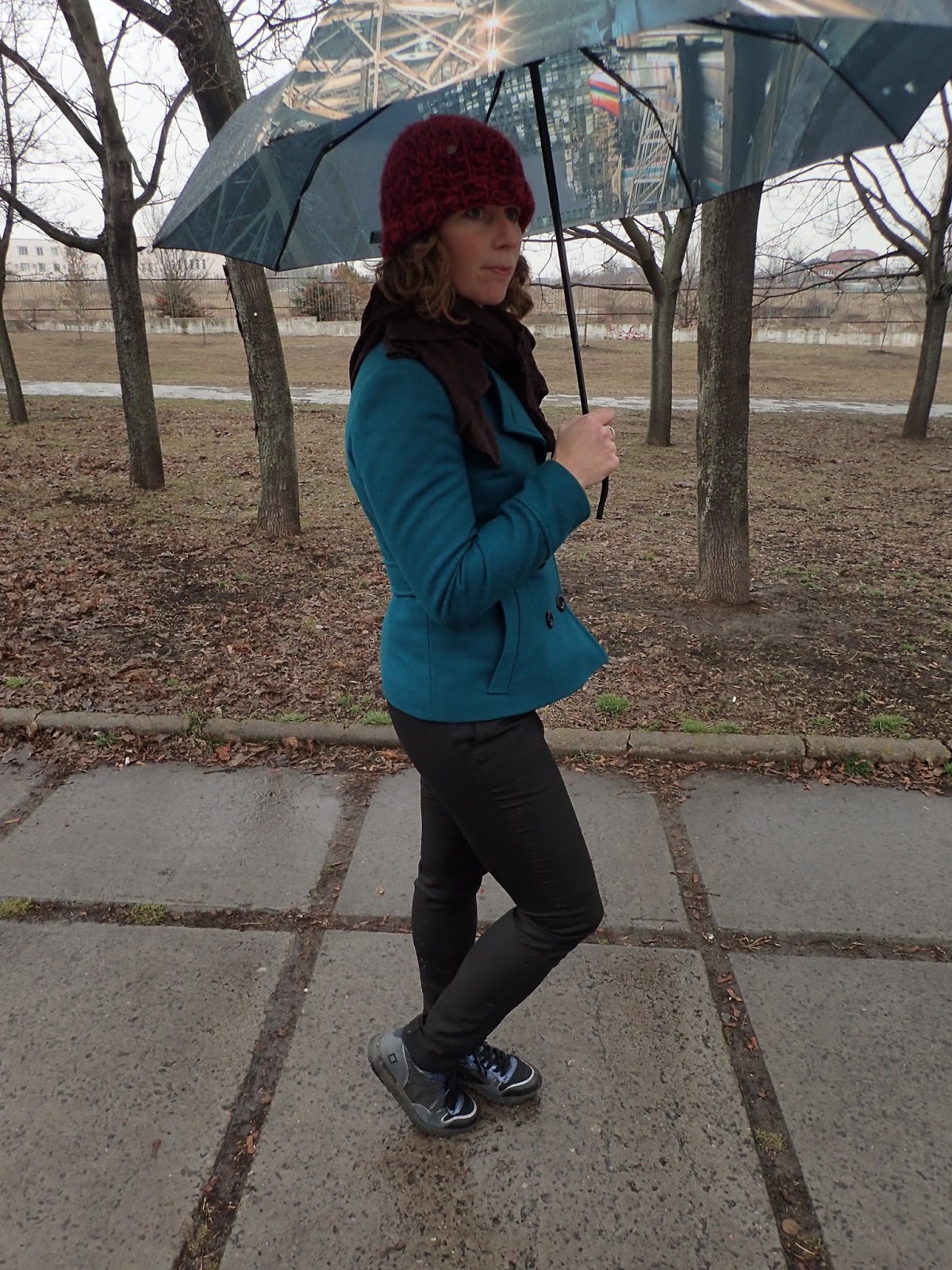
What started me on the slippery slope was a fact of timing. I was assigned my MSF (Medecins sans Frontieres) mission the day before I arrived in Hoi An...my mission in Ukraine. Cue a need for some cool weather clothing! Also I convinced myself that maybe I would learn something from how a tailor corrected for my mysterious shoulder problem. And after browsing through many shops, one of the tailors near my hotel had silk lining that I fell in love with and very cheap prices. So I flipped through a book of design ideas and picked out a Burberry for them to copy. I have a fondness for Burberries but generally they don't fit my shoulders very well.


At my first fitting I was actually pretty let down. The tailor is not the person who takes the measurements, so while things fit in terms of the biceps and the shoulder breadth, my shoulder situation was not fixed at all, and I had no movement in my arms due to that. However the matter was fixed for my second fitting! My only remaining complaint is my fault - I wanted the belt to be sides only, and end at the back princess seams, but I didn't mention it so I got a real belt.
The girl who did my measurements really drove home that my main issue was the slope of my shoulders, not the width or forwardness. My hands are itching to test this out on some Scouts...patience is not my strong suit.
My summary of the coat is that it is like buying something at Zara - it doesn't feel like expensive tailoring - except that it is actual wool and silk, it fits, and nobody suffered to make it. I don't shop at Zara due to my moratorium on sweatshop sewing factory products, which Zara and H&M continue to strongly support.

At Ao Dai, another tailor's shop on the main promenade of town, I fell in love with grey, bird print rough silk - it feels like organza. I showed the girls a picture of the Tilly Francoise and they copied it, and lined it with grey charmeuse. The fit is perfect but I could use a tiny bit more scoop in the front of the sleeve.


While I was chatting to the girls, I was fondling this nubbly chanel-type wool and wishing I needed something out of it. And then I thought of a jacket from Rag & Bone last year. I loved it and I still do, but it was 550$ and on the model it was so batwing that I knew if I wanted it I would need to learn how to copy it or find a pattern for something similar in order to make the shape suit me better than it suited the models. Unfortunately it's really hard to find these old pictures online:
http://www.neimanmarcus.com/Rag-Bone-Randi-Cropped-Shimmery-Cotton-Jacket/prod177150050/p.prod?ecid=NMAHy3bqNL2jtQ&CS_003=5630585
I showed the pictures to the girls and before I realised it I had agreed for them to copy it. I was pretty worried it was going to turn out crazy but they were so enthusiastic that they had it done the same evening, and I think I might have started a trend. One of the ladies was already thinking of making one for herself! I kind of like the original more, but I was impressed by how fast they translated my ideas into a concrete jacket.


My new wardrobe was rounded out by a pair of wool pants from the most famous of the tailors in Hoi An, Jaly. These pants are so tight that they will function as a block for future pants. The fabric is a blend of cashmere, silk, wool, and lycra, but without much stretch. Here I discovered a problem with knowing too much: by asking for them to be very tight, the tailor took me at my word and didn't leave enough ease in the butt for me to lift my leg on steps. This makes these pants uncomfortable to walk around in...
Did I say one pair? While I was drooling over the fabrics I accidentally said yes to some lurid purple, so I got those too. A good thing actually as the purple fabric is slightly heavier weight and has more lycra, so they stretch and are more comfortable.

So I suspect you are wondering about the quality of my items, considering that everything was done in literally 24 hours. I think there is a big variation between the tailors. I could have done an equally good job on my teal coat, because I would have done it more slowly and carefully. There are small signs of lower quality - the lining hangs down below the bottom of the coat, and there's no pleat in the lining. I demanded an inside pocket and they put it in at the end, and within a few days of wearing it had already ripped because they didn't do anything to the silk to support the pocket.
They sometimes stitched over the lining on the inside of both jackets, which reminds me of how I finish waistbands. I think the sleevecuffs on the plaid jacket could have been done better too, as the lining peeks out a bit and was just sewn in and topstitched. (I did ask for tabs on the arms but I forgot during my fitting, so they didn't go on in the end.) The pants are very nicely done and even have the seams bound on the inside waist. That's consistent with Jaly being the most famous and the highest quality of the tailors in Hoi An.
In the end actually this experience encouraged me. I tend to be brainwashed by brands. Things I have made that I love, I really love and I prefer - my tshirts, and one or two dresses. But all the rest of the stuff I've made is somehow not as good as the store bought equivalents. This experience showed me that that isn't inherently true. If I focus on quality and slow sewing, my results will be better than store bought. I also noticed through wearing these items that the loyalty is missing. I'm loyal to the things I've made myself! I miss them! It may seem fun to need an entire new capsule wardrobe for travel, but I miss my homemades a lot and I dream of getting to sew.
Something I did not foresee is the siren call of the picture in your head, the things you *really want to sew* becoming reality in front of your eyes in 24 hours. I also assumed that tailors, since they do nothing but sew, must sew better than I do.
What started me on the slippery slope was a fact of timing. I was assigned my MSF (Medecins sans Frontieres) mission the day before I arrived in Hoi An...my mission in Ukraine. Cue a need for some cool weather clothing! Also I convinced myself that maybe I would learn something from how a tailor corrected for my mysterious shoulder problem. And after browsing through many shops, one of the tailors near my hotel had silk lining that I fell in love with and very cheap prices. So I flipped through a book of design ideas and picked out a Burberry for them to copy. I have a fondness for Burberries but generally they don't fit my shoulders very well.


At my first fitting I was actually pretty let down. The tailor is not the person who takes the measurements, so while things fit in terms of the biceps and the shoulder breadth, my shoulder situation was not fixed at all, and I had no movement in my arms due to that. However the matter was fixed for my second fitting! My only remaining complaint is my fault - I wanted the belt to be sides only, and end at the back princess seams, but I didn't mention it so I got a real belt.
The girl who did my measurements really drove home that my main issue was the slope of my shoulders, not the width or forwardness. My hands are itching to test this out on some Scouts...patience is not my strong suit.
My summary of the coat is that it is like buying something at Zara - it doesn't feel like expensive tailoring - except that it is actual wool and silk, it fits, and nobody suffered to make it. I don't shop at Zara due to my moratorium on sweatshop sewing factory products, which Zara and H&M continue to strongly support.

 |
| Pants and jacket combo! |
 |
At Ao Dai, another tailor's shop on the main promenade of town, I fell in love with grey, bird print rough silk - it feels like organza. I showed the girls a picture of the Tilly Francoise and they copied it, and lined it with grey charmeuse. The fit is perfect but I could use a tiny bit more scoop in the front of the sleeve.
 |
| Silk organza does not soften with washing...this means my dress is always very wrinkly. |


While I was chatting to the girls, I was fondling this nubbly chanel-type wool and wishing I needed something out of it. And then I thought of a jacket from Rag & Bone last year. I loved it and I still do, but it was 550$ and on the model it was so batwing that I knew if I wanted it I would need to learn how to copy it or find a pattern for something similar in order to make the shape suit me better than it suited the models. Unfortunately it's really hard to find these old pictures online:
http://www.neimanmarcus.com/Rag-Bone-Randi-Cropped-Shimmery-Cotton-Jacket/prod177150050/p.prod?ecid=NMAHy3bqNL2jtQ&CS_003=5630585
I showed the pictures to the girls and before I realised it I had agreed for them to copy it. I was pretty worried it was going to turn out crazy but they were so enthusiastic that they had it done the same evening, and I think I might have started a trend. One of the ladies was already thinking of making one for herself! I kind of like the original more, but I was impressed by how fast they translated my ideas into a concrete jacket.


 |
| I still love the fabric but this item still hasn't proven itself useful. |

My new wardrobe was rounded out by a pair of wool pants from the most famous of the tailors in Hoi An, Jaly. These pants are so tight that they will function as a block for future pants. The fabric is a blend of cashmere, silk, wool, and lycra, but without much stretch. Here I discovered a problem with knowing too much: by asking for them to be very tight, the tailor took me at my word and didn't leave enough ease in the butt for me to lift my leg on steps. This makes these pants uncomfortable to walk around in...
Did I say one pair? While I was drooling over the fabrics I accidentally said yes to some lurid purple, so I got those too. A good thing actually as the purple fabric is slightly heavier weight and has more lycra, so they stretch and are more comfortable.
 |
| The purple pants - unexpected winner! |

So I suspect you are wondering about the quality of my items, considering that everything was done in literally 24 hours. I think there is a big variation between the tailors. I could have done an equally good job on my teal coat, because I would have done it more slowly and carefully. There are small signs of lower quality - the lining hangs down below the bottom of the coat, and there's no pleat in the lining. I demanded an inside pocket and they put it in at the end, and within a few days of wearing it had already ripped because they didn't do anything to the silk to support the pocket.
They sometimes stitched over the lining on the inside of both jackets, which reminds me of how I finish waistbands. I think the sleevecuffs on the plaid jacket could have been done better too, as the lining peeks out a bit and was just sewn in and topstitched. (I did ask for tabs on the arms but I forgot during my fitting, so they didn't go on in the end.) The pants are very nicely done and even have the seams bound on the inside waist. That's consistent with Jaly being the most famous and the highest quality of the tailors in Hoi An.
In the end actually this experience encouraged me. I tend to be brainwashed by brands. Things I have made that I love, I really love and I prefer - my tshirts, and one or two dresses. But all the rest of the stuff I've made is somehow not as good as the store bought equivalents. This experience showed me that that isn't inherently true. If I focus on quality and slow sewing, my results will be better than store bought. I also noticed through wearing these items that the loyalty is missing. I'm loyal to the things I've made myself! I miss them! It may seem fun to need an entire new capsule wardrobe for travel, but I miss my homemades a lot and I dream of getting to sew.
 |
| It was raining in Hoi An too! |